
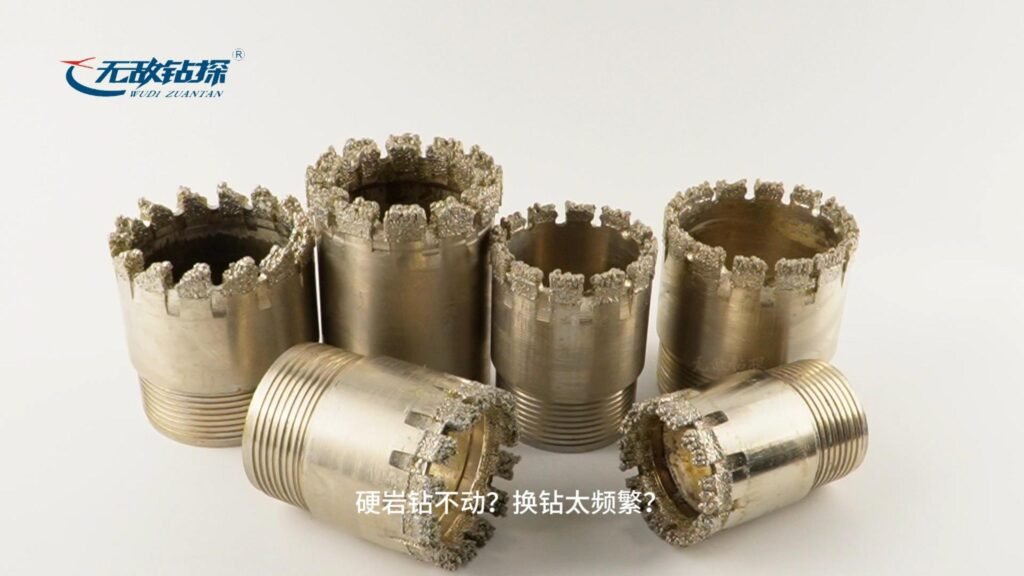
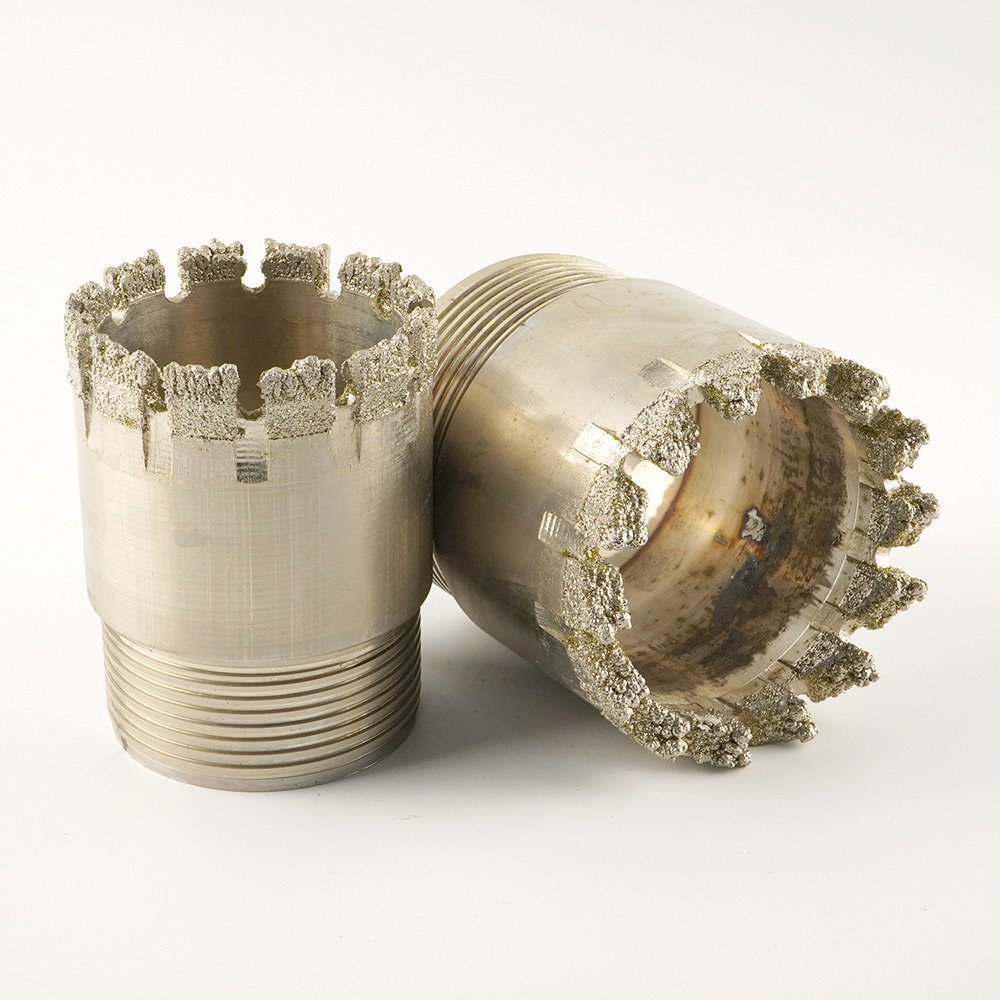
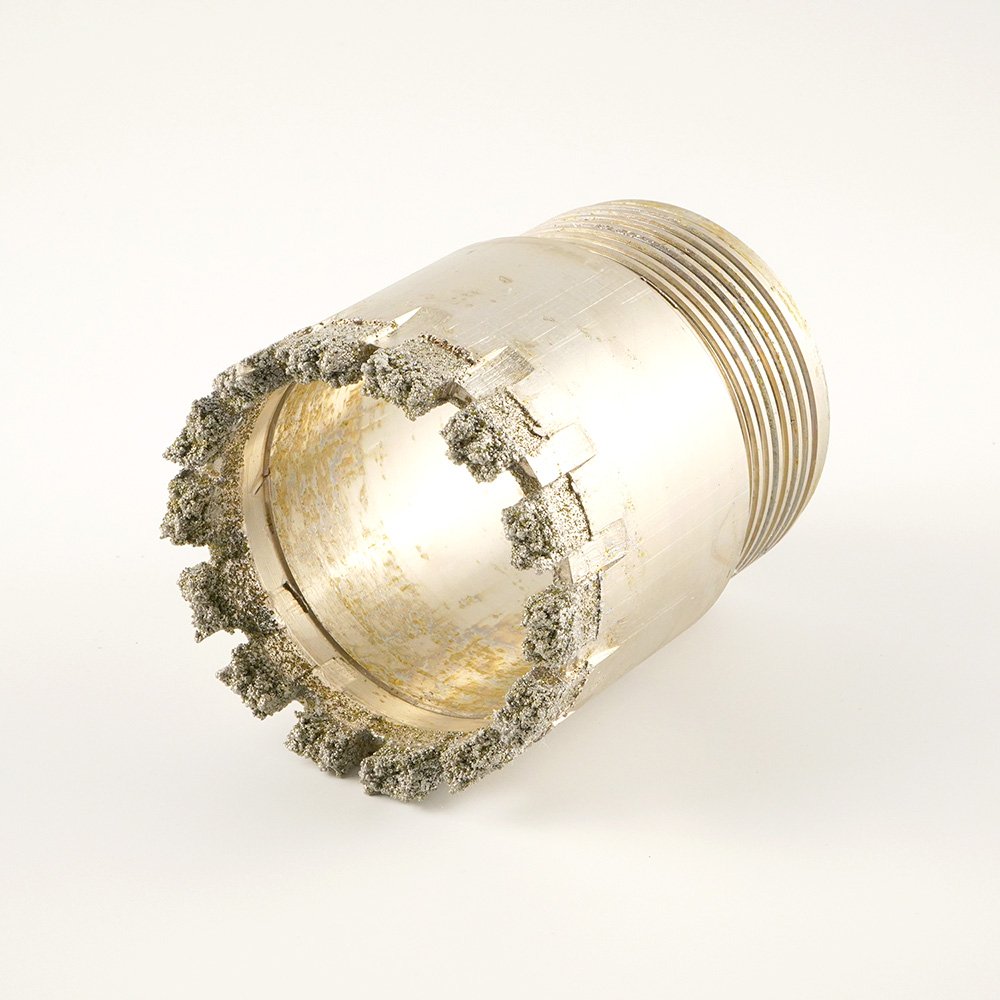
Changsha, December 11, 2025 — As global mineral exploration pushes into deeper and more complex geological formations, drilling contractors face a classic technical dilemma: when confronting solid granite, highly abrasive quartzite, or fractured and altered zones, are electroplated diamond core bits—often hailed as “efficient pioneers”—a formidable tool or a delicate instrument?
Mr. Zhang, a field supervisor from a seasoned geological engineering company in Hunan, shared his insights after completing a shale gas exploration project in western Hunan: “Selecting the right bit is like a traditional Chinese doctor prescribing a remedy—it depends on reading the ‘pulse of the formation.’ Electroplated bits excel in certain hard rock scenarios, but they are by no means a universal key.”
Granite: Efficient Cutting, Requiring Precise Control
Granite, a typical igneous rock, is known for its high hardness, integrity, and low abrasiveness. “In homogeneous, fine-to-medium-grained granite, a high-quality electroplated bit can cut through like a hot knife through butter,” explained Professor Li from the School of Resources and Safety Engineering at Central South University. “Its diamond particles protrude prominently, enabling fast cutting rates and ideal core recovery.”
However, Professor Li quickly highlighted a critical limitation: “This advantage heavily relies on near-perfect control of drilling parameters. Excessive weight on bit or rotation speed can cause premature wear of the bit matrix, leading to diamond grains being lost before they are fully utilized. Inadequate flushing fluid circulation results in poor cuttings removal and heat buildup, which can quickly ‘burn out’ the bit. It requires operators to treat it like precision instrumentation.”
Quartzite: A Severe Test of Durability
The challenge is entirely different when facing quartzite with a quartz content exceeding 75%. The extreme abrasiveness of quartz places harsh demands on the wear resistance of the bit matrix.
“This is traditionally where electroplated bits show their weakness,” commented a technical advisor from an international bit manufacturer who requested anonymity. “Compared to impregnated sintered bits specifically designed for highly abrasive formations, the matrix of traditional electroplated bits (typically nickel-based) may lack sufficient wear resistance. In quartzite, the matrix can wear faster than the effective exposure of diamonds, causing the bit to ‘glaze’ and lose its cutting ability—what the field often calls ‘slipping.'”
However, technology is advancing. This publication learned that leading manufacturers have introduced “enhanced” electroplating processes. By incorporating hard-phase particles like tungsten carbide or adopting multi-layer composite plating, they have significantly improved matrix abrasion resistance. “This broadens the application range of electroplated bits, but for extremely abrasive formations, most contractors still prefer the more ‘robust’ hot-pressed impregnated bits as their first choice,” the advisor added.
Altered and Fractured Zones: High-Risk Scenarios
In fractured, interbedded soft-and-hard altered zones formed by tectonic or hydrothermal activity, the primary challenge shifts from “hard grinding” to “preventing blockage, minimizing vibration, and ensuring core recovery.”
“In such formations, the bit is more like performing a delicate ‘archaeological excavation’ than brute-force cutting,” said Supervisor Zhang, pointing to a section of broken core from an altered zone. “The relatively smooth surface and typically more streamlined hydraulic design of electroplated bits can sometimes reduce the risk of mud coating compared to some sintered bits with rougher matrices, aiding in cuttings removal.”
He emphasized, however, that the greater challenge lies in the bit’s impact resistance. “Severe vibration and impact during drilling in fractured formations can easily cause micro-cracks or even spalling in the electroplated layer, especially thicker ones. If diamond grains are lost along with small pieces of the matrix, the bit fails rapidly.” Therefore, in strongly fractured, high-vibration conditions, more resilient sintered matrix bits or some new composite electroplated bits are considered safer choices.
Conclusion: Precision Matching, Not Simple Substitution
In summary, electroplated diamond core bits can achieve exceptional efficiency and core quality in solid, medium-hard to hard granite—provided parameters are precisely controlled. When confronting highly abrasive quartzite, traditional models face challenges, though enhanced products are bridging the gap. Their application in complex fractured altered zones involves a delicate balance between hydraulic performance and impact toughness.
“The future trend is not about one replacing the other, but deeper integration,” Professor Li projected. “Intelligent drilling systems can sense formation changes in real time and adjust parameters, while bit manufacturing is moving toward ‘functional customization’—perhaps within a single bit, different zones of plating design could simultaneously address cuttings removal in fractured layers and cutting efficiency in solid hard rock.”
For drilling decision-makers, the answer is becoming clearer: before sending an electroplated bit underground, thorough geomechanical analysis is essential, and its technical characteristics must be weighed against the project’s economics and the crew’s expertise. In this art of reaching deep into the earth, there is no standard answer—only the optimal solution based on science and experience.